If you have used an AI assistant lately, you have probably seen the letters MCP pop up in settings menus, plugin notes and developer news. So what is MCP, and why should someone who runs a WordPress or Elementor site care? In short, MCP is a common “plug” that lets AI tools connect to real apps and data, and in 2026 that now includes WordPress itself.
This guide explains MCP in plain words, shows how it works with WordPress, and covers the safety steps you should take before you let any AI agent touch your site.
What is MCP in plain words?
MCP stands for Model Context Protocol. It is an open standard that describes how an AI app (like a chat assistant or a coding tool) talks to outside tools and data sources.
Think of it like USB for AI. Before USB, every printer, mouse and camera needed its own special cable. Before MCP, every AI tool needed its own custom connection to every app. MCP gives them one shared way to connect.
Anthropic introduced MCP in late 2024. In December 2025 it was donated to the new Agentic AI Foundation, a fund run under the Linux Foundation and co-founded by Anthropic, Block and OpenAI. That move matters because it means no single company owns the standard. At the time of the donation there were more than 10,000 active public MCP servers and over 97 million monthly SDK downloads, and the protocol was supported in tools such as ChatGPT, Claude, Cursor, Gemini, Microsoft Copilot and Visual Studio Code.

How MCP works: clients, servers and tools
You only need three ideas to understand MCP:
- MCP client: the AI app you talk to. It asks questions and decides which tool to use.
- MCP server: a small program that sits in front of an app or service (your website, a calendar, a database) and describes what it can do.
- Tools and resources: the actions the server offers (for example “create a draft post”) and the read-only data it shares (for example “list recent pages”).
When you ask an AI assistant to “draft a blog post about our spring sale,” the client looks at the tools the server offers, picks the right one, sends the request, and shows you the result. The AI does not need to know how your site is built. It only needs the tool description.
Here is a simple way to compare the old way and the MCP way:
| Without MCP | With MCP | |
|---|---|---|
| Connecting a new AI tool | Custom code for each tool and app | One standard any MCP client understands |
| Who controls access | Varies by integration | The server decides which actions are exposed |
| Switching AI apps | Often means rebuilding the connection | The same server works with many clients |
| Typical setup | Developer project | Install a server, add it to your AI app |
MCP and WordPress: the Abilities API and MCP Adapter
WordPress joined the MCP world in two steps.
Step 1: the Abilities API. WordPress 6.9 added the Abilities API. It lets WordPress core and plugins register “abilities,” which are clearly described actions with a name, the inputs they accept, the output they return, and a permission check. You can think of an ability as a labeled button that software (including AI) can find and press.
Step 2: the MCP Adapter. The WordPress Core AI team built an official MCP Adapter that turns those abilities into MCP tools and resources. It was introduced to developers in February 2026, and on October 7, 2026 it became available as a canonical plugin on WordPress.org (version 0.7.0). It creates a default MCP server on your site and supports the newest stateless MCP specification while still accepting older clients.
So the chain looks like this:
- A plugin or WordPress core registers an ability.
- The ability is marked as public for MCP.
- The MCP Adapter exposes it through your site’s MCP server.
- An AI client such as Claude, Cursor or VS Code connects and can use it.
One important detail: abilities are not exposed to the default MCP server unless they are marked as public. Nothing is shared with AI just because you installed the plugin. You, or the plugin author, choose what is available.
What can you actually do with MCP on a WordPress site?
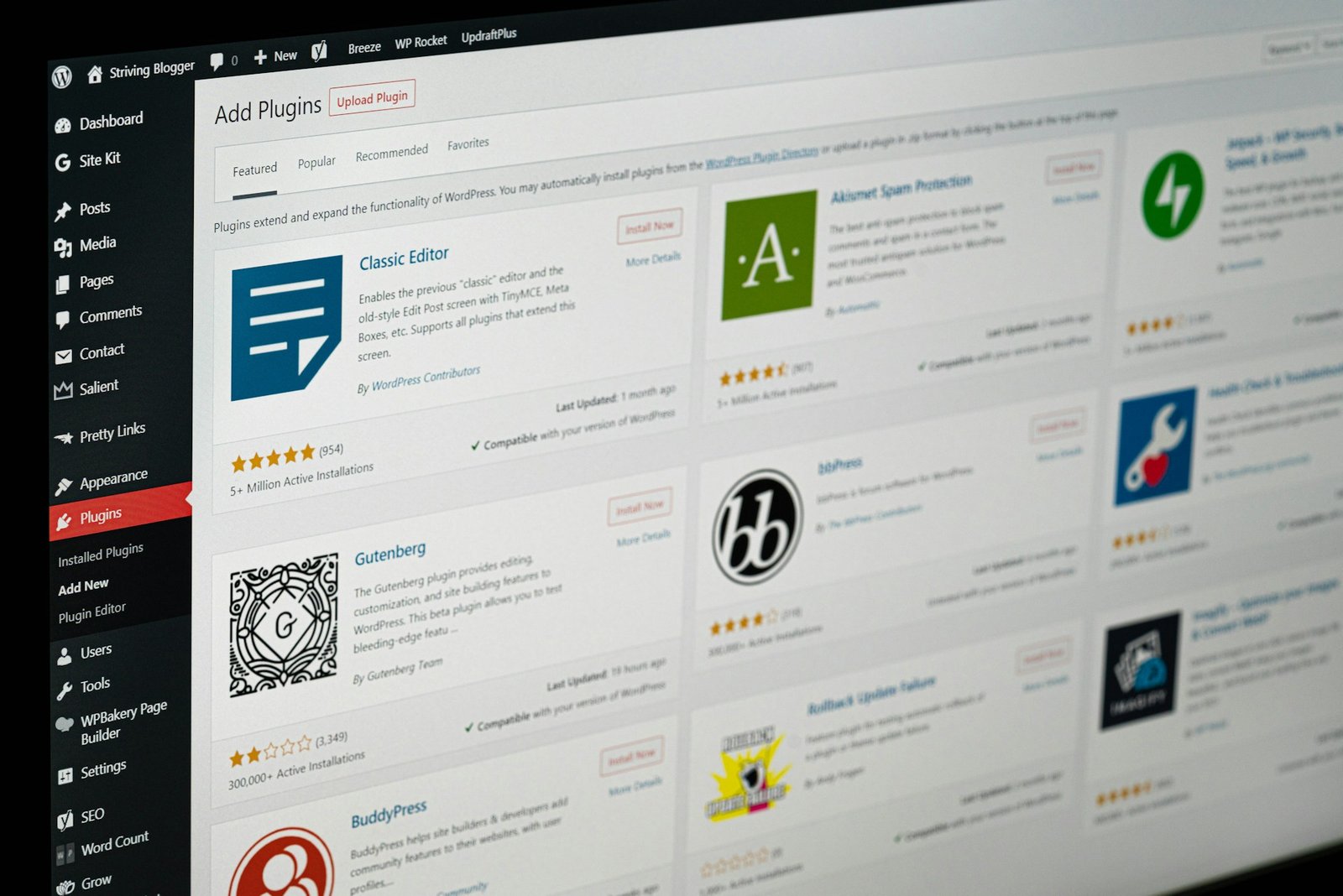
Right now MCP on WordPress is still early and the MCP Adapter is labeled experimental, with a stable 1.0 release as the goal. Even so, there are practical uses for site owners, freelancers and agencies:
- Content help: ask an AI assistant to create draft posts, update excerpts or fix headings, then review before publishing.
- Site checks: let an agent read site info, list plugins or spot pages with missing meta descriptions.
- Store and form tasks: plugins that register abilities can let AI look up orders or summarize form entries.
- Developer workflows: code editors with MCP support can read your site’s structure while you build a custom theme or widget.
- Agency routines: repeat the same safe, approved tasks across many client sites without logging into each dashboard.
If you design with Elementor, MCP does not replace the editor. You still build layouts visually. MCP is more useful for the jobs around the design: content updates, checks and reports. Clean, well-structured widgets also make your pages easier for both people and AI tools to understand. That is one reason we keep Bright Addons widgets simple to edit, with clear settings and tidy markup.
Is MCP safe for my website?
MCP is a connection, and any connection can be misused if it is set up carelessly. The WordPress developer team gives clear advice, because an MCP client acts as a logged-in WordPress user. Follow these rules:
- Create a dedicated user for AI access with the lowest role that still does the job. Never connect an AI tool with your main administrator account.
- Use application passwords for remote connections, and revoke them when you stop using a tool.
- Expose only what you need. Keep public abilities read-only where possible. Writing, deleting and settings changes should need extra care.
- Review before publishing. Have the AI save drafts, not live posts.
- Log and monitor usage so you can see what an agent did and when.
- Test on staging first. Try any new MCP setup on a copy of your site, and keep a fresh backup before you start.
- Only install MCP servers you trust. A server can describe its tools in any way it likes, so stick to official or well-reviewed sources.
If these steps sound like a lot, that is a good sign you should wait. Nothing breaks if you skip MCP for now.
Should you start using MCP in 2026?
Here is a simple way to decide:
- Start now if you are a developer, an agency managing many sites, or you already use AI tools daily and want them to work with your site.
- Watch and learn if you run one small business site. Keep WordPress updated, read the release notes, and try MCP on a staging site when the adapter reaches a stable release.
- Skip it for now if you have no staging site, no backups, or nobody to review AI changes.
Whatever you choose, the trend is clear. AI assistants are moving from “chatting about your site” to “working on your site,” and MCP is the standard making that possible.

Frequently asked questions
What is MCP in simple terms?
MCP, or Model Context Protocol, is an open standard that lets AI assistants connect to apps, files and websites in one shared way. It works like a universal plug, so one AI tool can use many services without custom code for each one.
Do I need to code to use MCP with WordPress?
Basic setup means installing the MCP Adapter plugin and adding your site to an MCP-capable AI app, which some site owners can do with a guide. Choosing which abilities to expose and writing custom ones still needs a developer for now.
Is MCP the same as an AI agent?
No. An AI agent is the software that plans and takes actions. MCP is the protocol the agent uses to reach tools and data. Our earlier post on AI agents explains how the two fit together.
Will MCP slow down my WordPress site?
The MCP Adapter only does work when an AI client sends a request, so normal visitors should not notice anything. As with any plugin, test it on staging and remove it if you do not use it.
Conclusion
So, what is MCP? It is the open standard that lets AI tools connect to real apps, and with the Abilities API and the official MCP Adapter, your WordPress site can now be one of those apps. It is powerful, still early and best used with care: a limited user, drafts instead of live posts, backups and a staging site.
While AI handles more of the routine work, your design still needs to look sharp and load fast. If you build with Elementor, you can browse our widgets, start with the free plugin from the Bright Addons home page, or check the docs for setup tips. When you need more, Pro plans start from $10 a year.